

A practical comparison of the two main ways to print custom sportswear — how they differ on durability, feel, colour and cost, and which is right for jerseys and team kit.
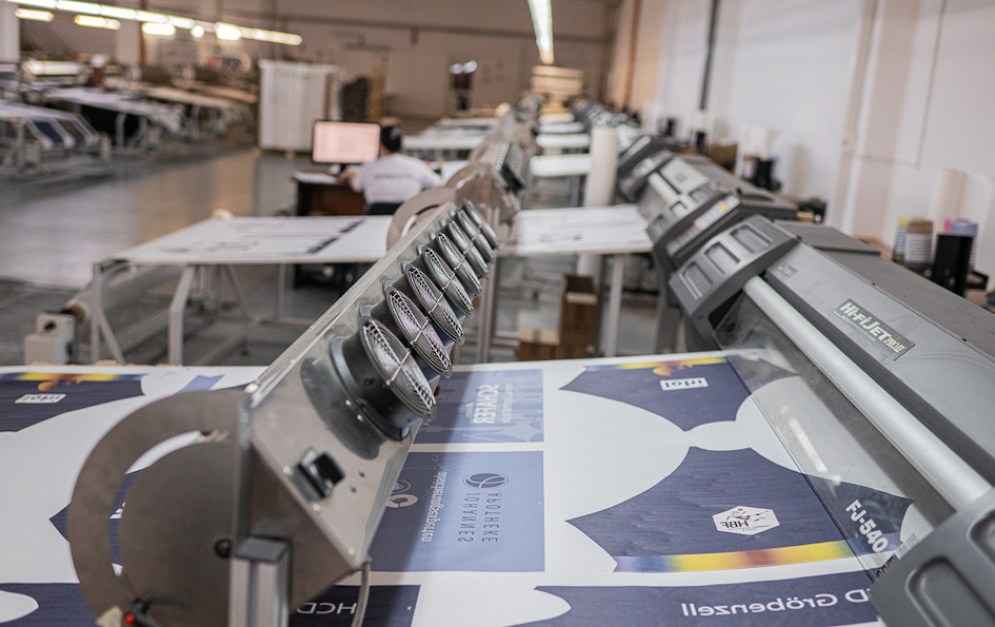
For custom sportswear, dye-sublimation is generally the better choice over screen printing: it bonds the design into the fabric so it never cracks, peels or fades, adds no weight or stiffness, and handles unlimited colours and all-over prints at no extra cost. Screen printing still has its place for simple logos on cotton, but on the moisture-wicking polyester used for jerseys and team kit, sublimation wins on durability and feel. Here's how the two methods actually compare.
What is sublimation printing?
In dye-sublimation, the design is printed onto transfer paper, then heat turns the ink into a gas that bonds directly with polyester fibres. The colour becomes part of the fabric rather than a layer on top — so there's nothing to crack or peel, and the surface stays fully breathable.
What is screen printing?
Screen printing pushes ink through a stencil (one screen per colour) onto the surface of a finished garment. It's cost-effective for simple, few-colour logos on cotton and produces a bright, opaque print — but each colour adds cost and setup, and the ink sits on top of the fabric as a layer that can crack or peel with wear and washing.
Sublimation vs screen printing: side by side
| Factor | Sublimation | Screen printing |
|---|---|---|
| Durability | Permanent — won't crack, peel or fade | Ink layer can crack/peel over time |
| Feel | None — print is in the fabric, fully breathable | Noticeable ink layer, can feel heavy |
| Colours & detail | Unlimited colours, gradients, photos, all-over prints | Best for few solid colours; cost rises per colour |
| Best fabric | Polyester / performance fabrics | Cotton and cotton blends |
| Cost at scale | Same cost for simple or complex designs | Cheaper for 1–2 colours; expensive for complex art |
| Best for | Jerseys, cycling kit, team kit, activewear | Simple logos on cotton tees/hoodies |
Which is right for sportswear?
Performance kit is made from polyester for its moisture-wicking properties — and sublimation is designed for polyester. It lets you print full-colour designs, sponsor logos, names and numbers edge to edge with no added weight, and it survives repeated washing and match use. That's why custom team kit, cycling jerseys and running gear are almost always sublimated. Reserve screen printing for simple logos on cotton casualwear.
The verdict
For jerseys and team kit, sublimation lasts longer, feels better and costs the same whether your design is simple or complex. For a one-colour logo on a cotton hoodie, screen printing is fine. Match the method to the fabric and the design — and for anything performance, that means sublimation.
Not sure which suits your project? Ask us for a recommendation and a free sample — send your design and we'll advise the best method.
Frequently asked questions
Is sublimation more durable than screen printing?
Yes, on polyester. Sublimation bonds the ink into the fibres so it can't crack or peel, whereas screen-print ink sits on the surface and can crack or peel with wear and washing.
Does sublimation printing fade?
No — because the dye becomes part of the fabric, sublimated prints keep their colour through repeated washing and use.
Why is sublimation used for sports jerseys?
Jerseys are polyester for moisture-wicking, and sublimation is made for polyester. It prints unlimited colours edge-to-edge with no added weight or stiffness.
Can you screen print on polyester jerseys?
It's possible but not ideal — the ink layer reduces breathability and can crack. For performance fabric, sublimation is the better choice.
Which is cheaper?
For 1–2 colour logos on cotton, screen printing is cheaper. For full-colour or all-over designs, sublimation costs the same regardless of complexity, so it's usually better value for kit.
Ready to bring your kit to life?
Tell us about your project and get a quote or a free sample.
Get in contact