

The fabric is where performance kit is won or lost. Here's what "moisture-wicking" actually means, how the technology works, and what to look for when you order custom sportswear.
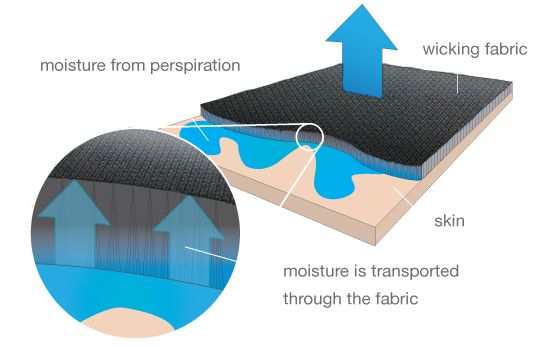
Moisture-wicking fabric is a performance textile — almost always polyester-based — engineered to pull sweat off the skin and spread it across the surface so it evaporates fast, keeping the wearer dry, light and cool. It works through capillary action: fine channels in the yarn and knit draw liquid outward, the same way a wick draws fuel. For custom sportswear, the fabric choice matters more than almost anything else — it decides how the kit feels over distance, how it prints, and how long it lasts. Cindra manufactures custom sportswear in moisture-wicking performance fabrics (including recycled-polyester options), with every fabric verified in our own textile testing laboratory before it reaches production.
How moisture-wicking fabric actually works
Cotton absorbs sweat and holds it — which is why a cotton tee gets heavy and clings on a long run. A moisture-wicking fabric does the opposite. Three things combine:
- Hydrophobic fibres. Polyester doesn't absorb water into the fibre, so moisture stays on the surface where it can move and evaporate.
- Capillary channels. The yarn and knit are built with tiny channels that pull liquid away from the skin and spread it over a wider area, speeding evaporation.
- Knit structure. An open or textured knit increases surface area and airflow, so sweat dries faster and the fabric breathes.
The result is "push-pull": sweat is moved off the skin and dried on the outside, so the garment feels dry even when you're working hard.
What performance fabrics are made from
Most technical sportswear uses one of these:
- Polyester — the workhorse. Lightweight, durable, fast-drying and the ideal base for dye-sublimation printing. Recycled polyester (rPET) performs the same and lowers the footprint.
- Polyester–elastane blends — add stretch and a compressive, close fit for cycling and triathlon kit.
- Polyamide (nylon) blends — soft hand-feel and abrasion resistance for base layers and premium pieces.
Natural fibres like merino wool wick well too, but synthetics dominate custom kit because they're lighter, dry faster, cost less at scale and take all-over print cleanly.
Beyond wicking: the finishes that matter
Modern performance fabric is more than a plain knit. Functional finishes are engineered in:
| Feature | What it does |
|---|---|
| Moisture management | Wicks and spreads sweat for fast drying |
| Breathability | Lets heat and vapour escape so you stay cool |
| Four-way stretch | Moves with the body; supports a race or compressive fit |
| UV protection | Shields skin on outdoor rides and runs |
| Odour control | Slows the bacteria that cause smell |
| Durability | Holds colour, shape and wicking through repeated washing |
Why the fabric decides the kit
Two jerseys can look identical and perform nothing alike. Fabric weight, knit and finish determine whether a cycling jersey breathes on a climb, whether a running singlet chafes over 20 km, and whether the colour still looks sharp after a season of washing. It also drives printing: because performance kit is polyester, it's sublimated — the dye bonds into the fibre with no added weight, so the fabric keeps wicking and breathing.
How performance fabric is tested
Claims like "moisture-wicking" only mean something if they're measured. In our in-house textile testing laboratory, fabrics are checked for colourfastness, shrinkage, stretch recovery, pilling and wash durability before they're approved for a production run — so the kit that ships behaves like the sample you signed off. For a brand or club, that consistency between sample and bulk is what separates a reliable manufacturer from a print shop decorating blanks.
What to ask for when you order
- State the use. Hot-weather racing wants a lighter, more open knit; cooler conditions want a mid-weight or thermal fabric.
- Request a fabric swatch or size set so you can feel the weight and stretch before committing.
- Ask about recycled options. Recycled polyester is a near drop-in swap with the same performance — a simple sustainability win.
- Confirm it's tested. A manufacturer that tests fabric in-house can guarantee the bulk matches the sample.
Choosing the right performance fabric for your kit? Get in touch for a fabric recommendation and a free sample — tell us the sport, conditions and quantities and we'll match the fabric to the job.
Frequently asked questions
What is moisture-wicking fabric?
What is moisture-wicking fabric?
How does moisture-wicking fabric work?
Through capillary action: hydrophobic fibres keep moisture on the surface while fine channels in the yarn and knit draw it away from the skin and spread it to dry quickly.
Is polyester or cotton better for sportswear?
Polyester, for active use. Cotton absorbs and holds sweat so it gets heavy and clings, while polyester wicks moisture away and dries fast.
Does recycled polyester wick as well as regular polyester?
Yes — recycled polyester performs the same as virgin polyester for moisture management, so it's a direct swap for a lower-footprint kit.
Why is performance fabric printed with sublimation?
Because it's polyester, and sublimation bonds the dye into the fibre. The print adds no weight or coating, so the fabric keeps wicking and breathing.
How do you know a fabric really wicks?
It's tested. We verify wicking, colourfastness, shrinkage and wash durability in our in-house textile laboratory before a fabric is approved for production.
Ready to bring your kit to life?
Tell us about your project and get a quote or a free sample.
Get in contact