

Quality at the forefront: our laboratory ensures our fabrics meet the highest standards.
At Cindra, we stress quality in every detail, and our state-of-the-art laboratory plays a crucial role. Our textiles undergo testing according to international standards, and their conformity is meticulously assessed. Here's an overview of our tests:
-
Weight Test
Materials are weighed to verify their specified/required weight.
-
Wash Test
This test, when properly conducted, is the simplest yet most important. It checks whether the materials retain their original properties without warping or shrinking after multiple washes.
-
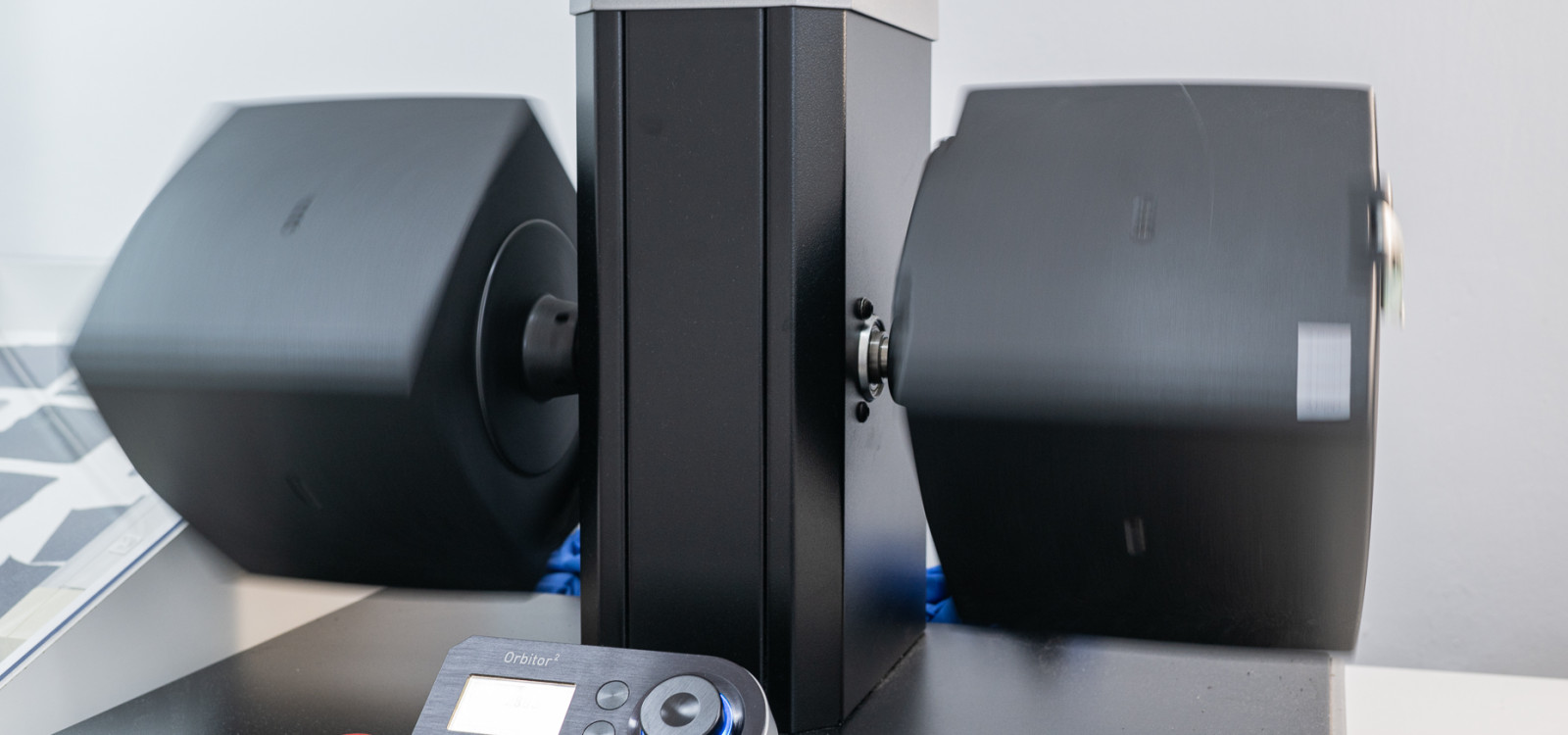
Orbiter Snagging and Pilling Test
This test evaluates the tendency of materials to snag and pill. Materials are placed in two rotating test drums (Snag Pods); one drum has spikes for snagging, and the other doesn't for pilling. After 3000 rotations, materials are evaluated on a scale of 1-5 (5: no damage; 1: wholly damaged).
-
Spray Rating Test
This test determines the water-repellent properties of textiles, with or without water-resistant or repellent treatments. Only the surface is wet with water. This method isn't designed to predict the textile's resistance to rainwater penetration. Evaluation involves comparing the fabric to the standard ISO table. A rating of 0 means the surface is completely wet, and 100 indicates total water repellence.
-
Martindale Method
This method simulates the natural wear of a seat cover by rubbing a sample of the test fabric against a standard fabric under a specified weight. The 'wear number' (unit: Martindale) leading to the wear of two threads is measured. A higher value indicates a more durable material. Wear is also assessed after a certain number of abrasion cycles.
-
Hydrostatic Water Pressure Test
This test checks waterproofness or resistance to water penetration using hydrostatic pressure (gravity-induced pressure in a resting fluid). Pressure is generated through pumping. The test measures the pressure at which the third water droplet appears on the material's upper side and evaluates the waterproofness at a set time and pressure.
-
Elasticity and Compression Test
Developed in collaboration with the University of Innsbruck at Cindra's request, this test measures the load stretch at 25%, 40%, and 65% elongation for elasticity. The compression test measures the force needed for 25%, 40%, and 65% compression with a 200mm diameter stamp, which is particularly useful in cycling for evaluating cycling pads.
Frequently asked questions
Cindra Enterprises runs an in-house textile testing laboratory where every fabric is checked against international standards before it enters bulk production. Seven core tests cover weight, wash performance, snagging and pilling, water repellency, abrasion resistance, waterproofing and elasticity — including a compression test developed with the University of Innsbruck for cycling pads.
What tests does Cindra's textile testing laboratory perform?
Seven core tests: a weight test, a wash test, the orbiter snagging and pilling test, the spray rating test for water repellency, the Martindale abrasion method, the hydrostatic water pressure test for waterproofing, and an elasticity and compression test. Together they cover how a fabric behaves in wear, in the wash and under water.
Do you test to international standards?
Yes. Textiles are tested according to international standards and their conformity is assessed and documented before approval. Our quality management is certified to ISO 9001, and results such as the spray rating are graded against the standard ISO table.
What is the Martindale test and why does it matter?
The Martindale method simulates natural wear by rubbing a sample of the test fabric against a standard fabric under a specified weight. The wear number — the number of cycles until two threads break — indicates durability: the higher the value, the more hard-wearing the material. Wear is also assessed after a set number of abrasion cycles.
How do you verify water repellency and waterproofing?
Two separate tests. The spray rating test wets only the surface and grades the result from 0 (completely wet) to 100 (total water repellence) against the ISO table. The hydrostatic water pressure test measures the pressure at which a third water droplet appears on the upper side of the material, evaluating waterproofness at a set time and pressure.
How are pilling and snagging measured?
In the orbiter test, materials are placed in two rotating test drums known as Snag Pods — one fitted with spikes for snagging, one without for pilling. After 3,000 rotations the material is graded on a scale of 1 to 5, where 5 means no damage and 1 means wholly damaged.
Can you test elasticity and compression for cycling pads?
Yes. This test was developed in collaboration with the University of Innsbruck at Cindra's request. It measures load stretch at 25%, 40% and 65% elongation for elasticity, while the compression test measures the force needed for 25%, 40% and 65% compression using a 200 mm diameter stamp — particularly useful for evaluating cycling seat pads.